What Is an AI Agent for a Small Business?
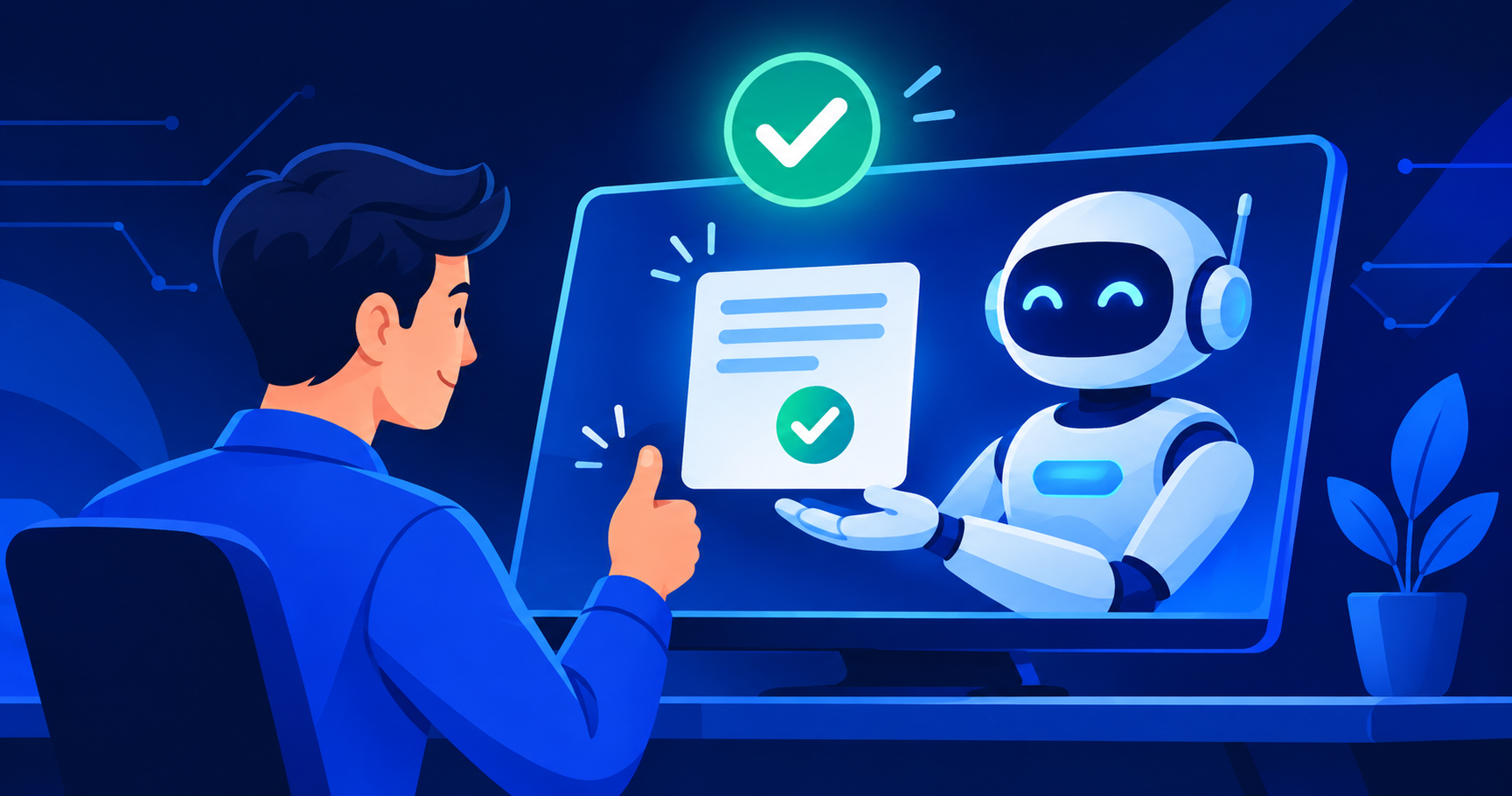
An AI agent is software that takes a goal, works out the steps and uses connected tools to complete the task, unlike a chatbot that only answers questions.
In Anant AGI, an agent proposes the action first and a person approves it by default - so the AI saves time without sending anything to your customers or touching money on its own.
How is an AI agent different from a chatbot?
A chatbot waits for you to ask something and replies. An agent is given a job, decides the steps and acts through the tools it is connected to, such as email, a customer list or a spreadsheet. General guides on small-business AI describe the same split: a chatbot answers, an agent does the work within set limits (Salesforce).
| Chatbot / assistant | AI agent | |
|---|---|---|
| Starts when | You ask a question | A trigger happens (for example an invoice goes overdue) |
| Output | An answer or a draft text | An action, or a ready-to-send draft of the action |
| Uses your data | Only what you paste in | Reads your business records |
| Needs you to do the work after | Yes | Not for routine steps |
What jobs can an agent do for a small business?
Typical examples named in general guides include answering customers and booking appointments, checking stock, ranking leads for the sales team and drafting marketing material. In Anant AGI's design the agents are specific to a domain - a Revenue Recovery agent, a sales agent, a finance agent and a support agent, each with its own purpose and permissions. See how overdue invoices get chased for a worked example of one agent's job.
How does approval work?
In Anant AGI's design, every action an agent wants to take is checked before it runs. The system looks at:
- Reversibility. Can it be undone easily? Drafting an email is reversible. Sending it is not.
- Reach. Does it change one internal record, or something external, customer-facing or financial?
- Confidence. How sure is the agent, given the data it had?
- Precedent. Has a person approved this same kind of action before without changes?
- Money and legal exposure. Does it move money, commit to a price or create a binding message?
The result is one of three outcomes:
| Outcome | What happens |
|---|---|
| Autonomous | Low-risk, reversible actions run immediately and are logged. |
| Draft and approval | The default for anything customer-facing, financial or irreversible. The agent prepares the real draft, explains its reasoning, and sends it to an approval queue. A person approves, edits or rejects it. |
| Blocked | Outside the agent's permissions. It is not even offered as a draft. |
Can the AI give itself more freedom?
No. In the product design, an agent cannot move itself from "draft and approval" to "autonomous" for a type of action - only a person can grant that, and the change is logged. The product tracks how many drafts in a row were approved without edits, but that count is only a signal shown to the person deciding. It does not grant autonomy by itself.
What if the AI gets it wrong?
Three safeguards are in the design:
- Verification. After an action runs, the system checks whether it produced the intended outcome, such as a payment received or an email delivered.
- Audit trail. Each action records the trigger, the data used, the plan, the risk class, who approved or rejected it and when, and the result.
- Continuous evaluation. Error and policy-violation rates are meant to be tracked per agent over time.
These are the design of the product. Parts are built and tested and parts are still in progress, so ask for a current demo rather than assuming every item is live.
How does this fit the rest of the product?
Agents are not a separate add-on - they read and write the same shared data described in what a Business OS actually is, which is also why one agent's draft can reference what another agent already knows about a customer, instead of starting blind every time.
How should a small business start?
A practical way, which also matches general advice to begin with one frequent, measurable, low-risk workflow:
- [ ] Pick one repetitive job, such as overdue-invoice reminders.
- [ ] Keep approval on for every outgoing message at first.
- [ ] Review the drafts for a few weeks. Note edits.
- [ ] Only then consider letting the lowest-risk actions run on their own.
- [ ] Keep checking the audit log.
FAQ
What is an AI agent in simple words?
Software that is given a job and carries out the steps using your business data and tools, rather than just answering questions.
Is it safe to let AI contact my customers?
Not without limits. In Anant AGI, customer-facing messages are drafted and need a person's approval by default.
Will an AI agent replace my staff?
The aim is to remove repetitive chasing and data entry so people spend time on decisions, not to replace a team.
Do I need approval for everything forever?
No. A person can choose to let specific low-risk action types run on their own, and can take that back at any time.
What if I do not want to use AI?
The product principle is that a manual user gets the full feature without needing AI.
Sources
- Agent definition and small-business examples: Salesforce, Botpress
- Approval tiers, risk factors, audit trail: internal product architecture documents